The fundamental HRBP career transition
The capability to think, influence and operate as a strategic HR Business Partner.
They didn't join simply to learn HR. They joined to become better business partners.
Anglo Indian Cafe Bar
Maxim Order Service, Vietnam
Heidelberg Materials Bangladesh PLC.
Over 100+ HR practitioners certified across Asia since 2020. Our alumni lead transformative workforce agendas in multinational corporations and fast-scaling regional enterprises.
AI, new ways of working, workforce transformation and rising employee expectations are reshaping what organisations need from HR.
“How can HR support the business?”
“How can HR help the business move forward?”
The modern HRBP needs to understand the business behind the people issue, connect people decisions to business outcomes, and influence leaders with confidence.
From HR Support to Strategic HR Partnership
Learn from experienced HR leaders and practitioners who bring real-world challenges, current practices and practical insights into the classroom.
Explore AI, workforce transformation, future of work, business acumen, ESG and the evolving role of the strategic HRBP.
Work with real cases, practical HRBP tools and workplace challenges. Build the confidence and capability to apply what you learn.
Learn directly with experienced facilitators and HR professionals across Asia through live discussions, case conversations and peer exchange.
Connect with HR professionals across organisations, industries and Asian markets—and build relationships that continue beyond the programme.
Join the AsiaHRM HRBP Alumni Society and stay connected through ongoing facilitator mentoring, peer learning and knowledge exchange.
Complete a formal assessment that demonstrates your HRBP knowledge, strategic thinking and ability to apply it in practice.
Learn Apply Connect Grow Lead
Our facilitators come from diverse corporate leadership backgrounds across Asia. They bring real-world practice, practical insights and lessons from their executive journeys into the programme. But there is something else that brings them together: a shared belief in giving back.
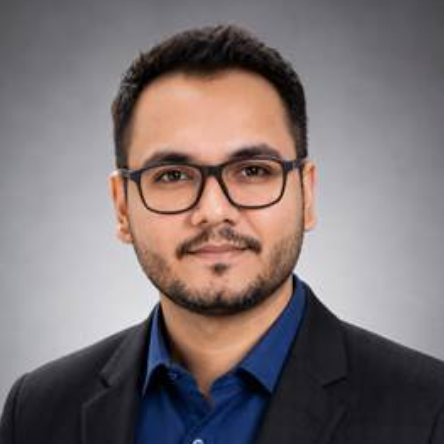
Over a decade of leadership experience across Asia spanning HR business partnering, organisation design, workforce planning, and AI-enabled people transformations. An early AsiaHRM contributor who teaches at leading industry and university forums.
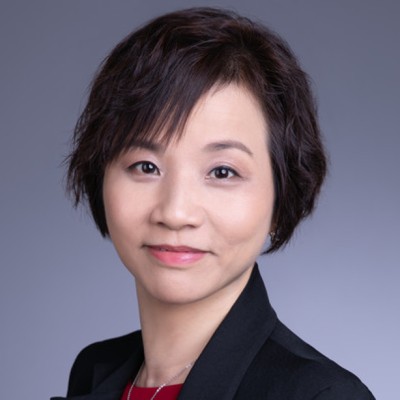
Rita has over 25 years of regional HR leadership experience across Hong Kong and Singapore. As founder of AsiaHRM and an ICF-credentialed executive coach, she supports leaders in strengthening strategic influence, governance capability, and organisational culture. She is also a certified John Maxwell Team trainer and a frequent speaker at HR forums across Asia.
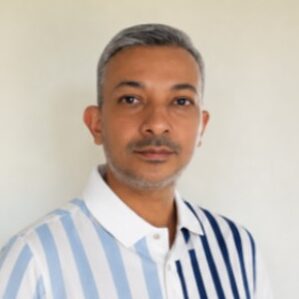
A future-of-work strategist and people analytics evangelist with over 20 years of global HR experience. Co-author of the HR Mirror 500 analytics handbook, he specialises in predictive workforce modelling and applying AI governance to people data.

Supports ~900 employees across 11 countries in the Asia Pacific region for a global technology company that specializes in electrification, motions & industry automation. With an Economics & Finance foundation from her Monash University degree, she bridges workforce decisions to business and financial outcomes.
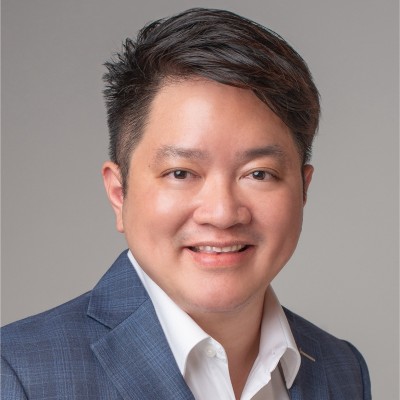
Leads learning and talent development at Singapore telecom operator M1, with a track record in enterprise learning systems and skills-based workforce planning. A regular panellist at regional future-of-work and workforce-skills conferences.
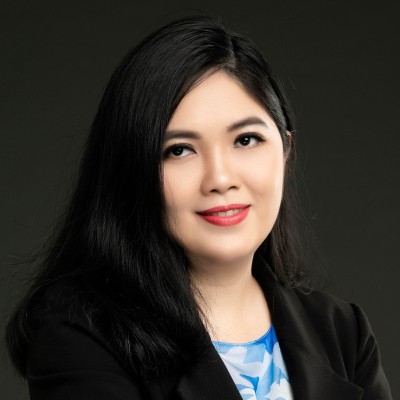
A well-rounded HR leader with local and regional exposure across culture, people and talent acquisition. At pharmaceutical group STADA, she leads talent acquisition and employer branding across Emerging Markets.
Faculty Independence Notice: All programme facilitators participate strictly in their personal professional capacity as regional educators and mentors. Their participation does not represent or imply endorsement by their respective employers.
Now that you know why the programme is different, here is what the learning journey looks like. The detailed module content below should be read together with the practical, interactive and assessment-based approach of the programme.
Live, Interactive online learning
7 Modules across 10 Weeks
Champion HRBP Certification
Formal written or project-based
Mentoring & Regional HR Network
Understand how the HRBP role is evolving and how AI, digital transformation and the future workforce are reshaping organisations. Explore a workforce that is hybrid across place, time, contract, intelligence and function, and what it means for culture-centred organisation design, skills-based models and HR itself.
Coaching, Consulting & People Governance. Build the ability to coach and advise leaders, navigate managerial bias, address people risks and guide organisations through ethical and governance challenges.
Business Acumen, Strategy & AI-Driven Financial Skills. Connect workforce decisions directly to business strategy and financial outcomes, while leveraging AI to enhance decision quality and executive influence.
Talent Management Ecosystems. Rethink talent acquisition, mobility, development, high-potential pipelines and succession planning in increasingly fluid business environments.
HR Metrics, Analytics & AI Governance. Turn people data into evidence-based business decisions. Move from descriptive reporting to predictive insight while applying strict AI governance and data-privacy guardrails.
Change Management & Digital Transformation. Help organisations navigate cultural, technological and structural change while building adoption, resilience and connecting workforce capabilities to business outcomes.
Real-World HRBP Stories & Leadership Integration. Our faculty comes back together for one final conversation with participants. Bring the entire HRBP journey to life through real stories, real challenges and real lessons from experienced HR and business leaders.
HR leaders in the AI era have to manage three dimensions at once: (A) help their organisation win in the AI age; (B) enable the AI transformation of HR itself, so HR can deliver, at scale, things that were never economical before; and (C) re-skill themselves for the role that A and B demand.
The module's central idea is the future workforce: hybrid along multiple axes (place, time, contract, intelligence and function) and what that workforce does to the way organisations and HR must be designed. Future workforce models, hybrid work and skills-based organisation design are covered as facets of that one picture.
By the end of Module 1, participants can read their own context through the three-dimension lens; describe the future workforce and sort claims about it by the strength of the evidence (settled, sound-but-stalling, or hypothesis) before acting on them; apply a culture-centred org-design capability, powered by systems thinking, to a live situation, to the future workforce and to HR itself; reframe a leader's AI question from activity (“how many are AI capable?”) to impact and opportunity before answering it; and commit to a personal capability plan they build across the remaining modules and demonstrate in the capstone. Module 1 is the map for the certification.
The Context and HR's Opportunity
Four forces: AI agents in workflows, the shrinking half-life of skills, distributed teams, and collapsing barriers to entry. The bigger shift for leaders: the organisations we serve are learning how AI changes their business model, competition, customers and work, and the HR role is being redrawn at the top.
HR's own “shale moment”: three things that were not feasible at scale earlier (diagnosis and redesign, harvesting the signals in every interaction, and building with user feedback at speed) are becoming economical. The trap: AI framed only as a training metric or a cost-cutting exercise misses all three.
The Future Workforce
A workforce hybrid along five axes: place, time, contract (employees, contractors, partners), intelligence (humans and agents) and function (fluid cross-functional teams). Emerging roles include digital teammates, super-individual contributors, player-coach managers and one-person ventures, set against Asia's longevity and demographic shifts.
Claims are sorted into three evidence tiers:
Business strategy decides which hybrid fits.
The Capability: Culture-Centred Org Design, Powered by Systems Thinking
Culture sits at the centre, with five drivers around it: strategy and the capabilities it demands, structure, process, rewards and people (adapted from Galbraith's Star Model). Built through stories, then applied forward: participants put the future workforce through the same five points to design the organisation that can run it, and discover how workforce planning, onboarding, performance management or engagement change as a consequence.
The Mindset and the Map
Six shifts: service provider to product owner; symptom-solver to systems thinker; intuition to evidence; HR-inside-out to business-first, as an HR leader; tool user to builder; know-it-all to learn-it-all.
Coaching, culture stewardship, compliance, ethics and ER, change management, deep business and financial acumen, and core talent processes remain the licence to operate and are covered in later modules.
A skill
Read any organisation (a crisis, the future workforce, or HR itself) through the culture-centred five-driver lens, locate the misalignment, and design the fix across all five rather than the one in front of you.
A mindset
Business-first, as an HR leader: reframe a people-and-organisation question from activity to impact and opportunity before answering it, then deliver the answers the business actually needs. Think in systems, not symptoms, and read the evidence before redesigning: know what is settled and for which work, what stalls, and what is still a hypothesis.
An insight and a plan
AI's biggest prize for HR is scale of what was never scalable, not cost-cutting. Each participant leaves with a Compass, two priority capabilities, and one skill they will learn with AI in the next 90 days.
Assessment is based on 70:20:10 principles of learning. Participants also complete a self-assessment (the Capability Compass) before the module and again at the end.
Case solution
Participants submit a short case solution, working the future-workforce design in depth.
Peer comments
Participants provide comments on peer case solutions.
Short quiz
Participants answer a short quiz to test concepts discussed.
There are no qualifying marks. The assessment serves as a development scorecard, read against the self-assessment. Session time communicates the key ideas; the case work and reading carry the rest.
Shivam Mishra is an HR leader with over a decade of experience across Asia, spanning HR business partnering, organisation design, workforce planning and talent management. He has led multiple cycles of technology-driven change in HR, including the current cycle of AI transformation. An early contributor to AsiaHRM, he teaches in a personal capacity at industry and university forums, with a focus on developing the HR community in Asia.
Equip HRBPs to become trusted strategic advisors who coach leaders effectively and uphold strong people governance.
Strategic advisory mindset
The mindset of a modern HRBP.
Deep coaching skills
GROW model, powerful questions, active listening and bias interruption.
Consulting frameworks
Diagnosing issues and shaping leadership decisions.
People governance & risk
Fairness, consistency and ethical safeguards.
ESG integration
Bringing ESG into HR decision-making.
Ethical lenses
Navigating complex people dilemmas.
Strengthen your ability to coach and influence leaders.
Apply consulting and governance frameworks to guide decision-making.
Identify and mitigate people risks early.
Integrate ESG and ethics into everyday HR advisory.
Become a trusted strategic advisor in the AI-driven workplace.
Equip HR Business Partners to turn people data into evidence-based business decisions, moving from descriptive reporting to diagnostic and predictive insight, while applying strict AI governance, fairness and data-privacy guardrails to every analysis and every HR technology decision.
Predictive Analytics Model Design
Design a predictive retention or performance-driver model:
AI / HR Vendor Governance Audit
Evaluate AI-enabled HR tools for algorithmic bias and data-compliance risk:
Executive Data Storytelling & Influence
Present data-backed recommendations that shift executive consensus:
Develop business and financial acumen to connect workforce decisions directly to business strategy and financial outcomes, while leveraging AI to enhance decision quality and executive influence.
Understanding Business Strategy & Value Creation
Decoding Financial Statements Through an HR Lens
Workforce Economics & Business Case Development
AI-Driven Financial Translation & Executive Influence
Connect workforce decisions to business strategy.
Quantify the financial impact of people decisions.
Use AI to generate insights and influence leadership decisions.
Equips emerging HR practitioners to move from HR support function to transformation partner by:
Understand the transformation
Business strategy, technology and workforce implications.
Lead the people side of change
Stakeholders, resistance, leadership and culture.
Build the workforce for digital transformation
Reskill, upskill, grow people and build capabilities.
From HR initiatives to business impact
Metrics, adoption and business outcomes.
Diagnose transformation through a workforce lens.
Design an integrated people response.
Connect HR interventions to business outcomes.
Building fluid pipelines from attraction to readiness and succession. The Workforce Architect connects recruitment, mobility, development, high-potential management and succession into one agile ecosystem, guided by future capabilities, talent evidence and shared leadership ownership.
Equip participants to design an integrated talent ecosystem that anticipates capability needs, builds diverse pipelines, develops readiness, and protects continuity in critical roles.
Skills-First Acquisition and Internal Talent Marketplaces
Build pipelines before vacancies arise.
High-Potential Pipelining and Development for Readiness
Turn identification into evidence-based growth.
Dynamic Succession Architecture and Pipeline Health
Make succession continuous and leader-owned.
Think in talent flows, not isolated programs
Map how talent enters, develops, moves and becomes ready, and fix broken connections.
Use evidence to activate potential
Separate potential from readiness and turn identification into sponsored, measurable development.
Run succession as a continuous business discipline
Build, test and monitor internal and external pipelines throughout the year.
Participants redesign the talent ecosystem for one business unit, capability or critical role family, integrating demand, pipelines, development, succession, governance and measures.
| Output | Requirement |
|---|---|
| Blueprint | Two-page view of demand, capabilities, talent pools, governance and data flows. |
| Readiness Map | Anonymized succession view with evidence standards and development actions. |
| Executive Pitch | Six-minute recommendation plus one 30-day commitment. |
To bring the entire HRBP journey to life through real stories, real challenges and real lessons from experienced HR and business leaders, helping participants integrate their learning, sharpen their judgement and step forward as strategic business partners.
All programme facilitators are invited back to the Practitioner Forum to share real-world experiences, case studies and lessons from their own HR and business leadership journeys. Through an interactive forum, participants can ask questions, explore different perspectives and connect the learning from each module to their own organisational challenges.
See how strategic HRBP really works in practice, beyond frameworks and theory.
Learn from the real experiences, successes and lessons of senior practitioners.
Understand how effective HRBPs influence, challenge and partner with business leaders.
Explore how to handle complexity, ambiguity, resistance and competing business priorities.
Integrate the programme's key capabilities into a practical HRBP approach of their own.
Identify actions they can take immediately to increase their impact in their organisation.
Leave with greater confidence, perspective and clarity about their role as a strategic HRBP.
Early Bird rates are shown per participant. Normal rates apply once the Early Bird period closes.
Because great HR development is not just about transferring knowledge. It is about helping people grow.
This programme is brought to life by HR practitioners who believe that stronger HR professionals build stronger organisations and better workplaces.
Our facilitators are not here simply to deliver a course. They share a common mission: to give back to the HR community, share what they have learned through their professional journeys, and help the next generation of HR professionals become more confident, capable and strategic business partners.
They bring their experience, practical knowledge—and their heart for developing people—into every learning experience.
Facilitators participate in their individual professional capacity. Their participation does not represent or imply endorsement by their current or former employers.
A certificate tells people that you completed a programme. Capability demonstrates what you can actually contribute.
A stronger understanding of strategic HRBP practice.
Practical tools and approaches you can apply.
Greater confidence engaging business and organisational challenges.
A formal assessment demonstrating your capability.
Connections with HR professionals across Asia.
Ongoing mentoring and peer learning after graduation.
Collaborating with leading regional HR associations, development councils, and professional communities across Asia to empower future-ready HR business partners.
Powered by HR Calabarzon Group, Inc
Advancing human resource leadership and practice in Japan and across Asia.
Selangor Human Resource Development Centre
|
|
|